Life Science Branding: How to Build a Brand for a Life Science Company
In short
- Life science branding is the name, identity, graphics and website that make a company's science clear and trusted.
- Build the visual system from the real science, with rules for charts, diagrams, posters and decks.
- Keep every claim backed by data, and let the regulatory team check the words around the logo.
Contents (9)
Life science branding is the work of giving a life science company a clear identity: its positioning, name, logo, typography, colour, graphics, motion and website. It covers biotech, diagnostics, research tools, medtech and the companies that serve them. The aim is simple. People who meet the company should understand what it does and trust that the science is real.
This guide covers how to build that brand step by step, with examples from life science brands we designed at Second Eight. For the wider view across research-led companies, see our guide to science branding.
What life science branding covers
A life science brand is more than a logo. It is a system the whole company uses, from the first investor deck to the label on a sample kit. It usually includes:
- Positioning: one clear sentence on what the company does and for whom
- The name and the logo, with versions for small and large sizes
- Typography and colour that work on screens, in print and in charts
- A graphic language built from the science
- Templates for decks, posters, papers and documents
- Motion for talks, launches and the website
- Guidelines, so the team can use all of it without a designer in the room
Branding for the life sciences has one extra job. The same brand has to work for a scientist reading a poster and for an investor skimming a deck in two minutes.
Know who has to believe you
Most life science companies talk to five groups. Each one reads the brand in a different way.
- Scientists check the details. A wrong molecule or a chart that shows nothing costs trust fast.
- Investors need the idea in seconds, then proof that the team is serious.
- Partners such as pharma companies, CROs and labs want a company that looks organised and easy to work with.
- Regulators do not judge the logo, but they do read the claims in your materials.
- Patients, later on, need plain language, care and no promises the data cannot keep.
Decide who has to believe you first. A seed stage platform company talks mostly to investors and partners. A company with a product in clinics also talks to doctors and patients. The brand can grow with the company, but the first version should be built for the first audience.

Not sure your brand is working?
I'm Sam, founder of Second Eight. I design brands for AI, tech, science and health companies, so I know what investors and customers read in a brand before they read anything else. Send me your website and deck, and I'll tell you what works, what's holding you back and what I'd change. You get a one-page scorecard and a 30-minute call with a straight answer: keep it, fix it or rebuild it.
Naming a life science company
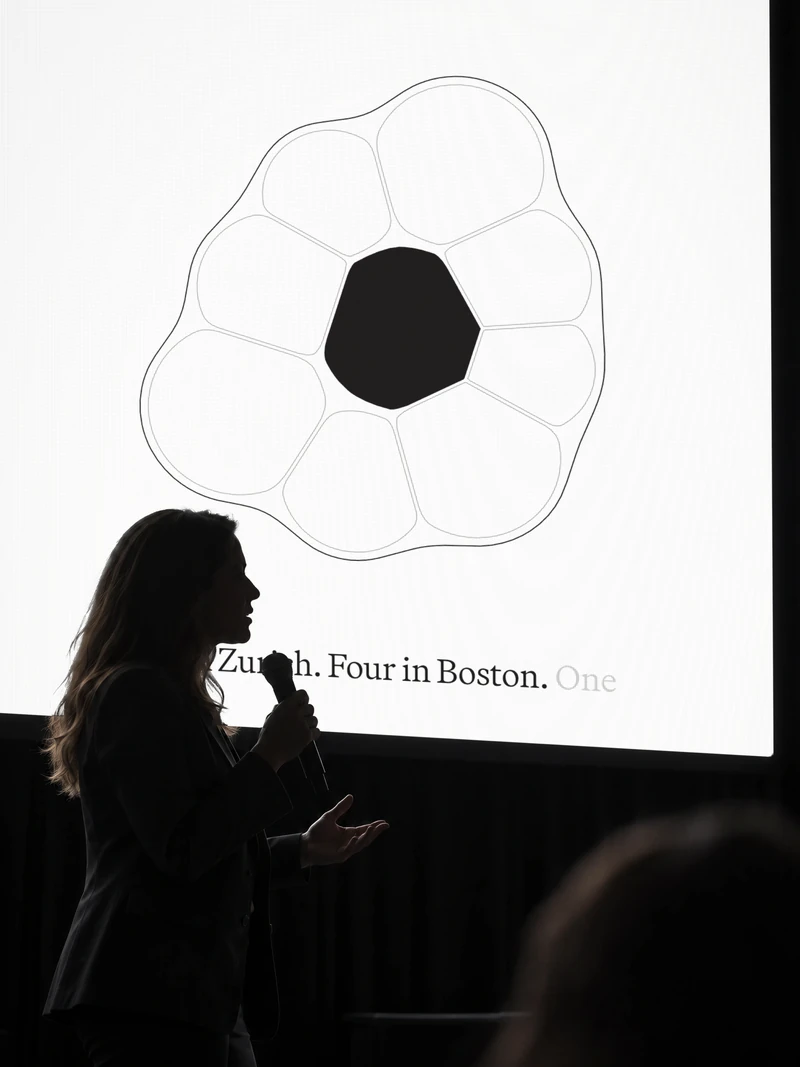
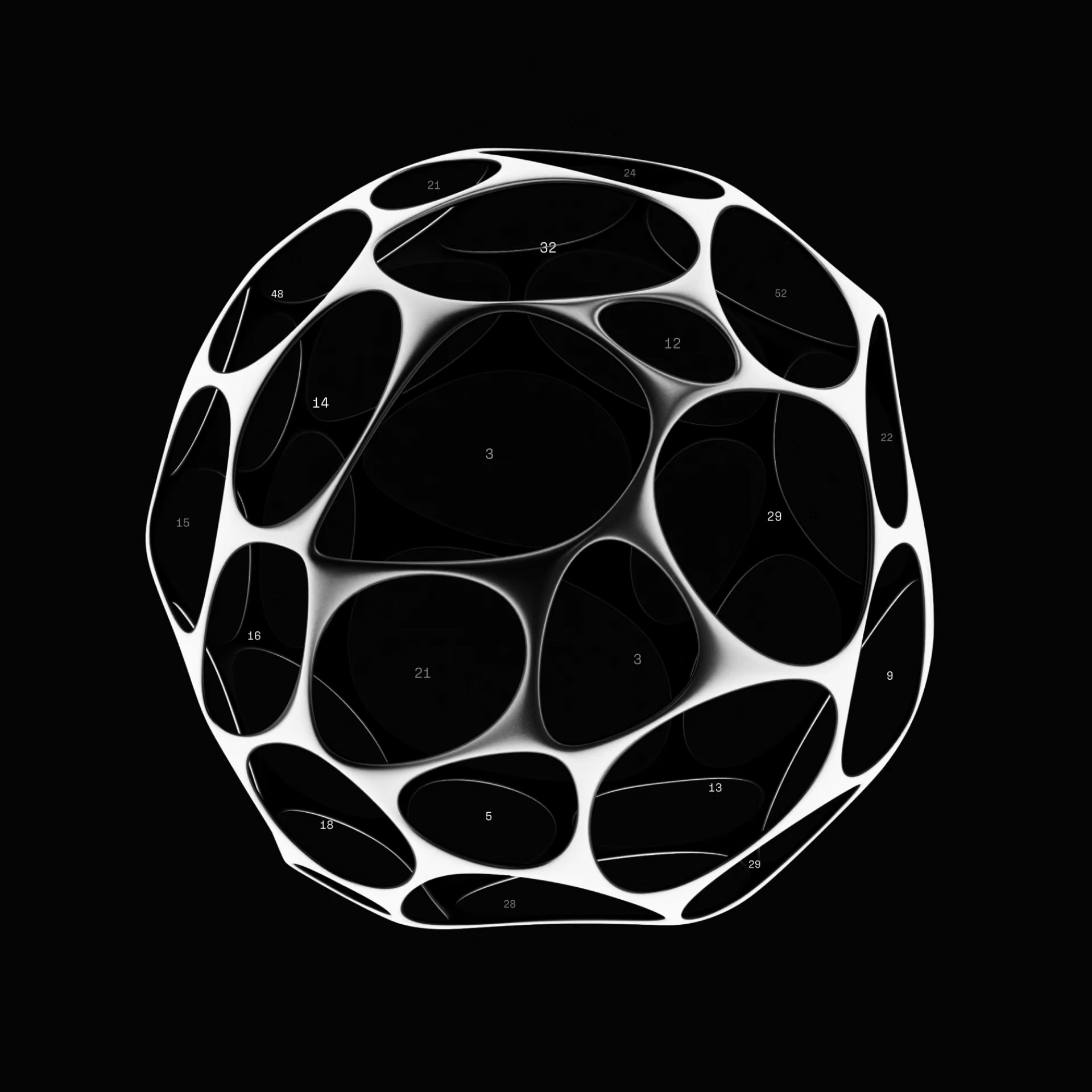
If the company still needs a name, choose it before the visual work, so the name and the visual idea come from the same place. Tessel, a cell banking company, takes its name from tessellation: shapes fitting together with no gaps, the way cells form tissue.
A good life science name passes a few simple checks:
- It is short and easy to say on a call.
- It does not lean on jargon that will age with the pipeline, such as one target or one modality.
- It is not too close to a drug name, a competitor or a large company in the same field.
- The domain and the trademark are realistic to get in your main markets.
- It still works if the company moves from a platform to a product.
Our guide on how to build a brand identity for a biotech startup goes deeper into naming and the steps after it.
A visual identity that works with data
Life science companies show a lot of data: charts, diagrams, cell images, structures and results. A biotechnology visual identity has to make that material look clear and consistent. If the brand only works on the homepage, it will break the first time someone builds a results slide.
Build the graphics from the real science. This keeps them accurate, and it gives the company a look that belongs to it.
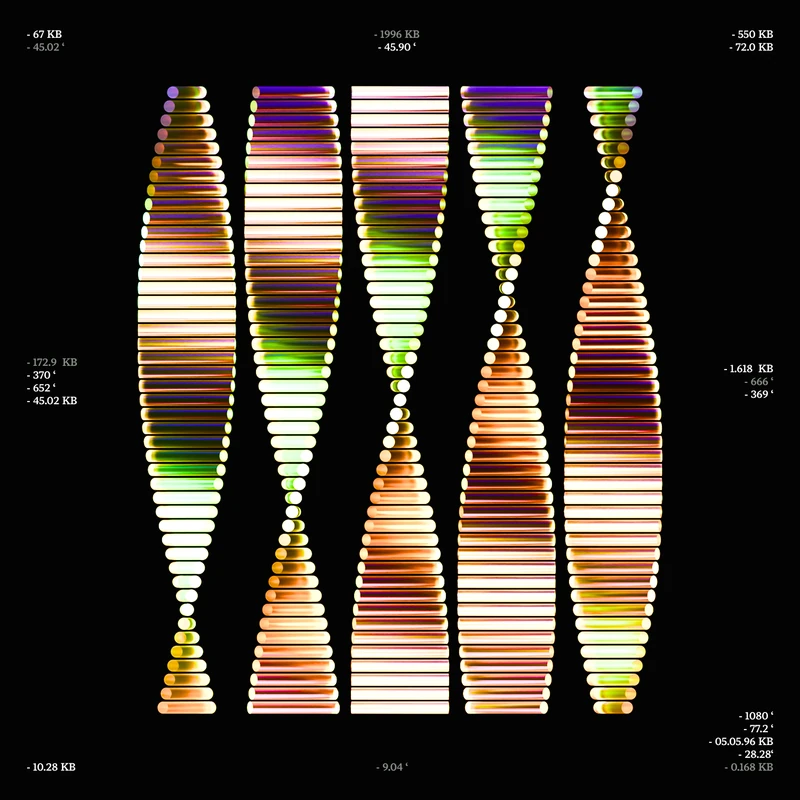
- Sequence, genetic data analysis. Small lines stand for sequencing, and the palette comes from the four DNA bases.
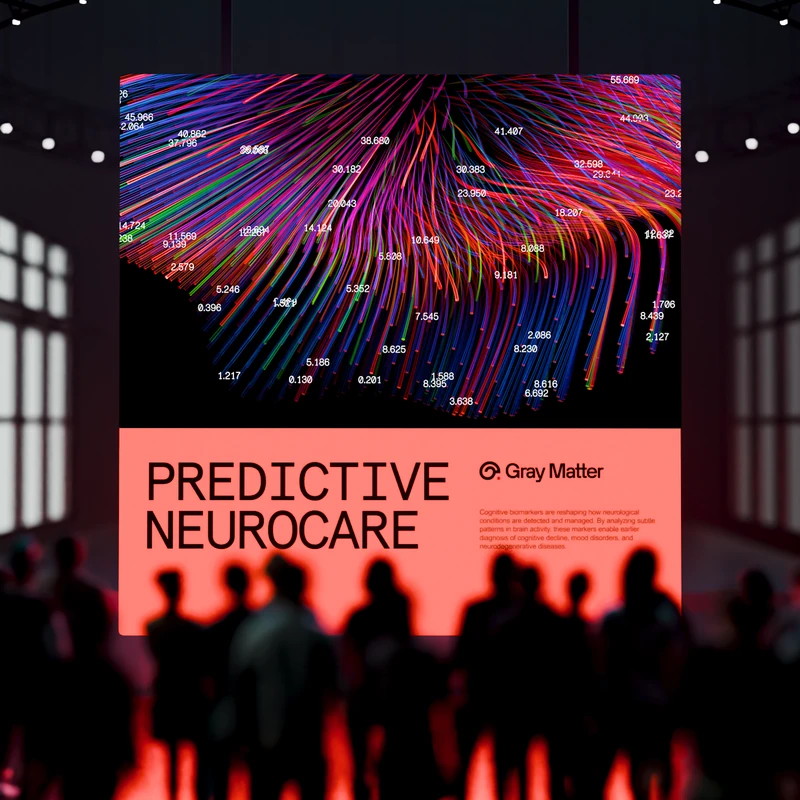
- Gray Matter, predictive neurocare. The graphics come from the brain's structure and mathematical mapping, generated with nodes.
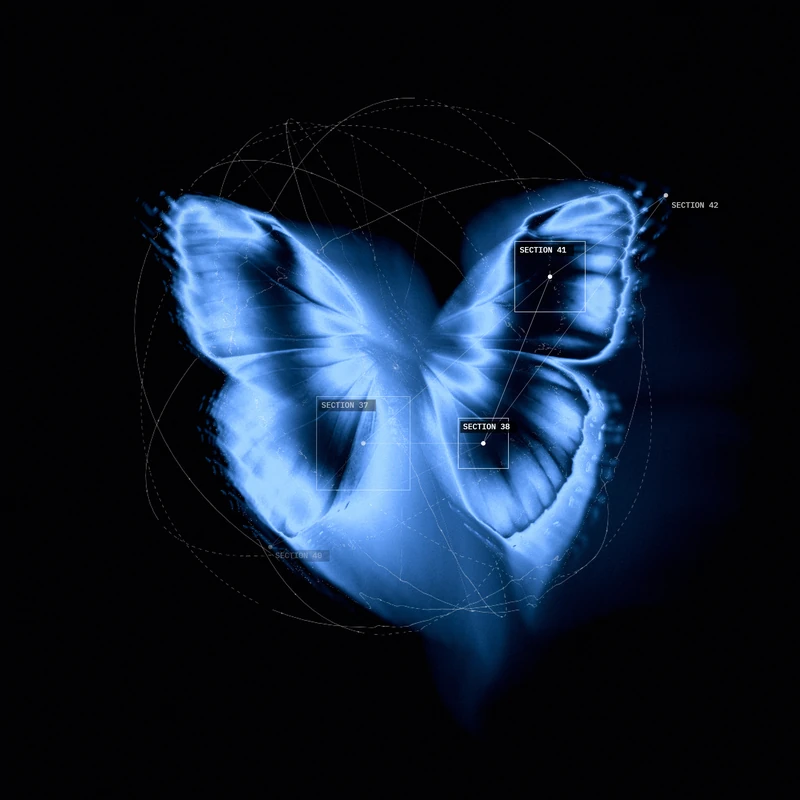
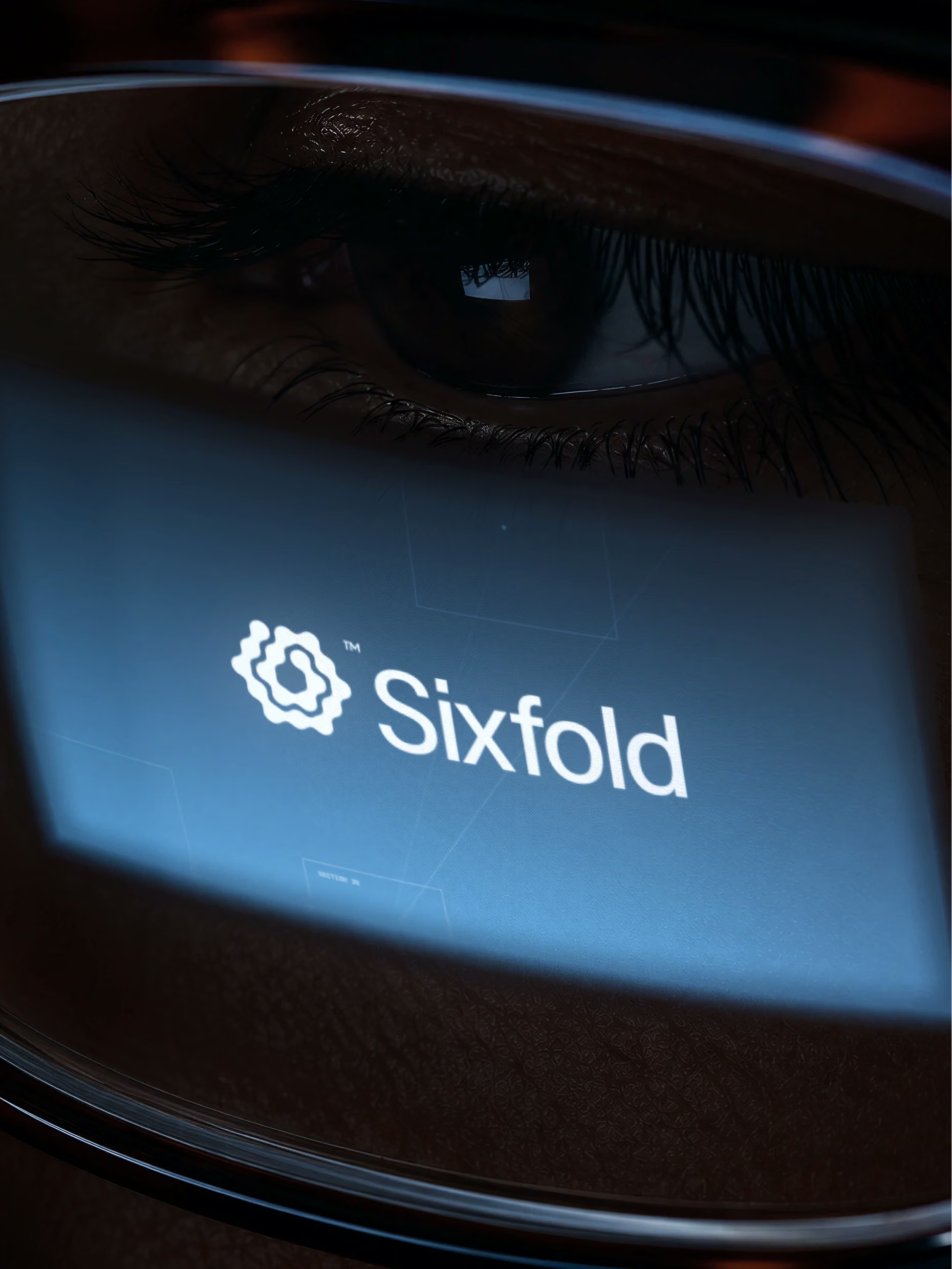
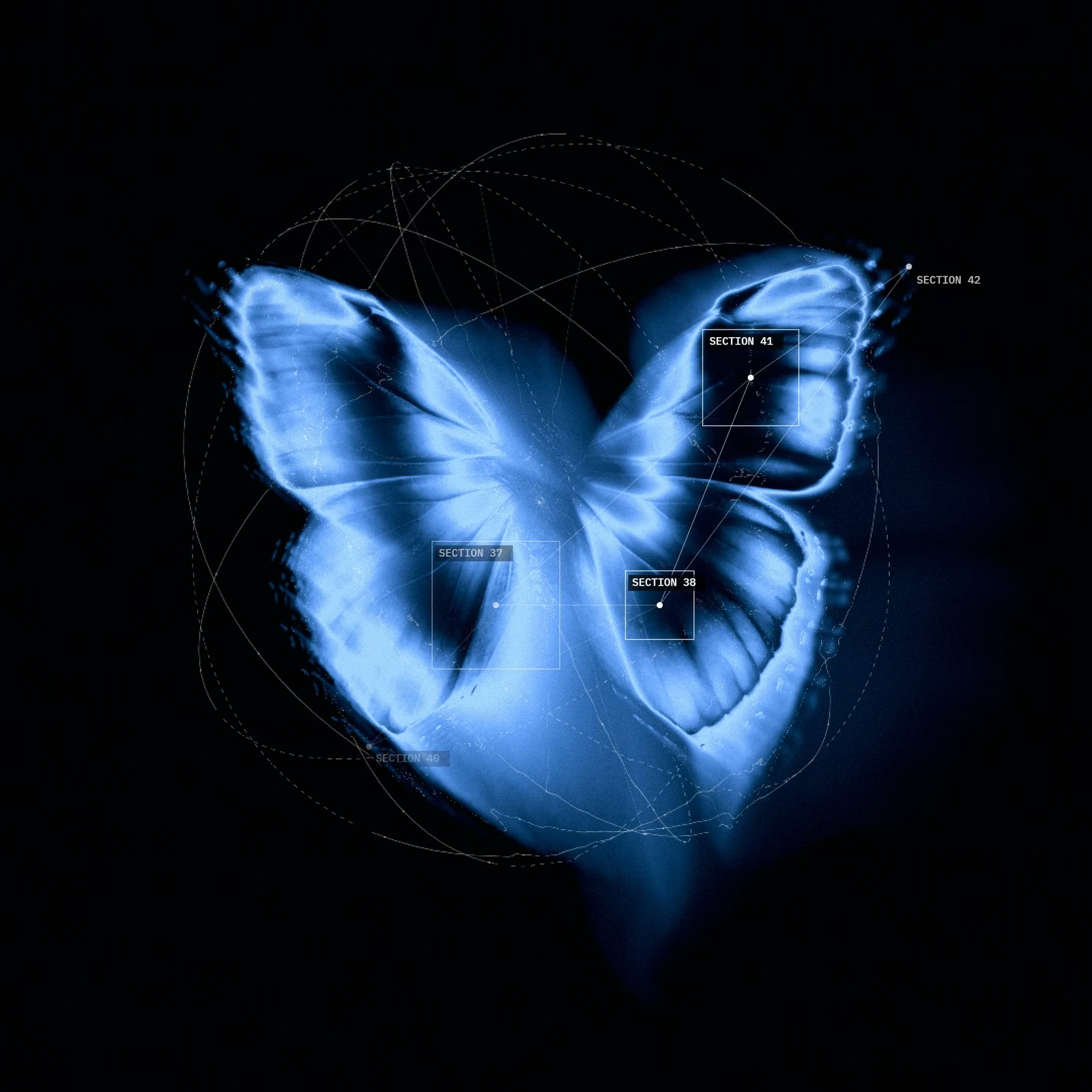
- Sixfold reads what scientific instruments see. Its graphics are built from thermal imagery: specimens seen as heat, sectioned and numbered.

Then set rules for the everyday material:
- A chart style with set colours, line weights and label sizes, so every chart looks like it comes from the same company.
- A diagram style for mechanisms and workflows, with simple shapes and one accent colour.
- Colour that holds up in data, with enough contrast and colours that stay distinct for people with colour blindness.
- Typography that reads well in long text, in small labels and on a slide seen from the back of a room.
Ask the company's own scientists to check every graphic before it goes out. They will catch what a designer misses. A life science brand identity earns trust in these details more than in the logo.
Be careful with claims
Life science brands work under rules that most brands do not. The words around the logo matter as much as the logo.
In the US, the FDA says prescription drug promotion must not be false or misleading, must balance efficacy and risk information, and must reveal material facts about the product. In the EU, the medicines directive requires member states to prohibit advertising prescription only medicines to the general public. For health products more broadly, the US Federal Trade Commission expects health claims to be backed by competent and reliable scientific evidence.
Your regulatory and legal team has the final word. For the brand, it means a few habits:
- Write the tagline about what the company does, not about results it has not shown.
- Keep words like cure, safe and proven out of brand copy unless the data and the approvals support them.
- Check that images do not imply a result, such as a recovered patient next to a drug still in trials.
- Leave room in layouts for risk information, references and disclaimers, so they are not squeezed in later.
- Keep a source for every number on the website and in the deck.
The brand in decks, posters, booths and websites
A life science brand lives in more places than most. Each one needs its own rules.
- Decks. The investor deck is often the first real use of the brand. Build a template with slide types for the science, the data, the team and the plan.
- Posters and papers. Scientific posters are dense and follow set formats. A template with a clear grid, one accent colour and room for figures keeps the brand visible and leaves the science easy to read.
- Conference booths. People see a booth from far away and for a few seconds. Use the logo large, one line on what the company does and one strong graphic.
- Websites. The site has to explain the science in plain words first, then give experts the detail through publications, data and team pages.
- Motion. In talks and launch videos, motion can show a process that a still image cannot.
Gray Matter's exhibition panels use its data lines at full height, so the brand reads from across the room.

When to rebrand
A life science company usually needs a new or stronger brand at one of these moments:
- Before a large funding round
- When it spins out of a university or comes out of stealth
- When a platform becomes a product with its own customers
- After a merger or a change of focus
- When the deck, the website and the booth look like three different companies
If the company has not changed and the brand still works, a refresh of the templates and the website is often enough. A full rebrand makes sense when the company itself has changed.
Common mistakes
- Generic science imagery. Stock DNA helixes, glowing molecules and blue gradients say little about what the company does.
- A logo without a system. A logo alone gives the team nothing to build decks, posters and charts with.
- Decorative data. Charts and diagrams that look scientific but show nothing lose the scientists.
- Copy written for one audience. Text only scientists understand loses investors, and text written only for investors loses scientists.
- Claims ahead of the data. Big promises in a tagline are hard to take back and can cause regulatory trouble.
- No guidelines. Without simple rules, every new hire makes their own version of the brand.
To see these ideas in finished work, look at these biotech branding examples from our studio.
Questions about life science branding
Life science branding is the work of giving a life science company a clear identity: its positioning, name, logo, typography, colour, graphics, motion and website. It makes complex science clear to investors, partners and patients while staying accurate enough for scientists.
A clear idea taken from the company's own science, a short palette, one or two typefaces, a graphic language that can show data, and templates the team can use for decks, posters and documents.
Biotech branding is one part of life science branding. The life sciences also include diagnostics, research tools, medtech and the service companies around them. The principles are the same, but the audiences and the rules on claims change from field to field.
Most identity projects take a few weeks. A larger system with naming, a website, motion and templates takes longer. Agree the scope before the work starts.
It helps to work with a designer or a [biotech branding agency](/biotech-branding-agency) that is used to science. They will read the research, ask the right questions and know how the brand has to work in papers, posters and decks.
Second Eight is a life science branding agency for science, health and technology companies.
Not sure your brand is working?
I'm Sam, founder of Second Eight. I design brands for AI, tech, science and health companies, so I know what investors and customers read in a brand before they read anything else. Send me your website and deck, and I'll tell you what works, what's holding you back and what I'd change. You get a one-page scorecard and a 30-minute call with a straight answer: keep it, fix it or rebuild it.