Deep Tech Branding: How to Brand Quantum, Robotics, Energy and Hard-Tech Companies
In short
- Deep tech branding is the name, identity, graphics and website that make hard technology clear and trusted.
- Lead with what the technology does, and build the visual system from the real science.
- Build a brand that lasts through a long road to product and helps the company hire.
Contents (8)
Deep tech branding is the work of giving a hard-tech company a clear identity: its positioning, name, logo, typography, colour, graphics, motion and website. It covers quantum computing, robotics, energy, new materials, space, semiconductors and other companies built on new science or engineering. The aim is the same as in any brand. People should understand what the company does and believe the team can build it.
This guide covers how to do that step by step. For the wider view across research-led companies, see our guide to science branding.
Explain a technology people cannot see
Most deep tech is invisible. A qubit, a battery chemistry or a control algorithm does not photograph well. Even a robot often looks like a lab prototype for years. The brand has to make the idea visible before the product is.
Start with one plain sentence on what the technology does for the customer. Not how it works, but what changes because it exists. Then add one level of detail for people who want it, and one more for experts. The website, the deck and the brand copy should follow that same order.
- Lead with the problem. Grid storage, drug discovery or factory automation are easier to grasp than the physics behind them.
- Use one simple analogy, then stop. One clear comparison helps. Five confuse.
- Show the real thing when you can. Lab photos, test rigs and early hardware build more trust than renders of a finished product.
- Keep the numbers honest. State what has been shown in tests and what is still a target.
Know who has to believe you
Deep tech companies talk to more groups than most startups, and each reads the brand in a different way.
- Investors need the idea in seconds, then proof that the science and the team are real. BCG reports that deep tech often has intensive capital requirements, so the brand has to hold up through many rounds.
- Engineers and scientists check every detail. A wrong diagram or a vague claim costs trust fast.
- Government agencies, labs and grant bodies want a serious, well organised partner.
- Industrial partners such as manufacturers, utilities and large customers want a company that looks ready to work at their scale.
- Future hires want to know the mission is real and the team is good.
Decide who has to believe you first. A seed stage quantum company may talk mostly to investors and grant bodies. A robotics company with pilots talks to customers and partners. The brand can grow, but the first version should be built for the first audience.



Not sure your brand is working?
I'm Sam, founder of Second Eight. I design brands for AI, tech, science and health companies, so I know what investors and customers read in a brand before they read anything else. Send me your website and deck, and I'll tell you what works, what's holding you back and what I'd change. You get a one-page scorecard and a 30-minute call with a straight answer: keep it, fix it or rebuild it.
Naming a deep tech company
If the company still needs a name, choose it before the visual work, so the name and the visual idea come from the same place.
- It is short and easy to say on a call.
- It does not depend on one technique that the company may move past.
- It avoids overused words such as quantum, neural or fusion unless the company truly owns the field.
- It is not too close to a competitor or a large company in the same field.
- The domain and the trademark are realistic to get in your main markets.
Build the visual system from the science
Generic tech imagery makes deep tech companies look the same. Glowing circuits, blue gradients and abstract particles say little about what the company does. The stronger route is to build the graphics from the company's own science or engineering.
This can mean a pattern drawn from a material's structure, a motion system based on how a robot moves, or a colour palette taken from real measurements. The result is accurate, and it gives the company a look that belongs to it.
- Sequence, genetic data analysis. Small lines stand for sequencing, and the palette comes from the four DNA bases.
- Gray Matter, predictive neurocare. The graphics come from the brain's structure and mathematical mapping, generated with nodes.
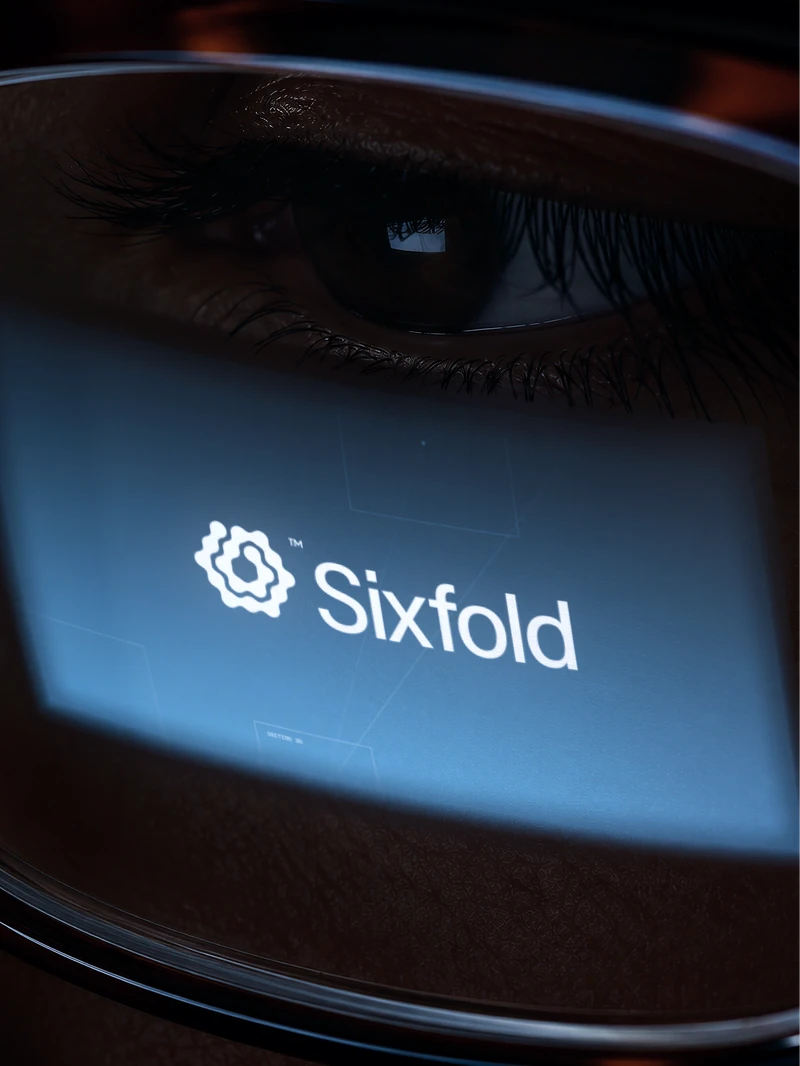
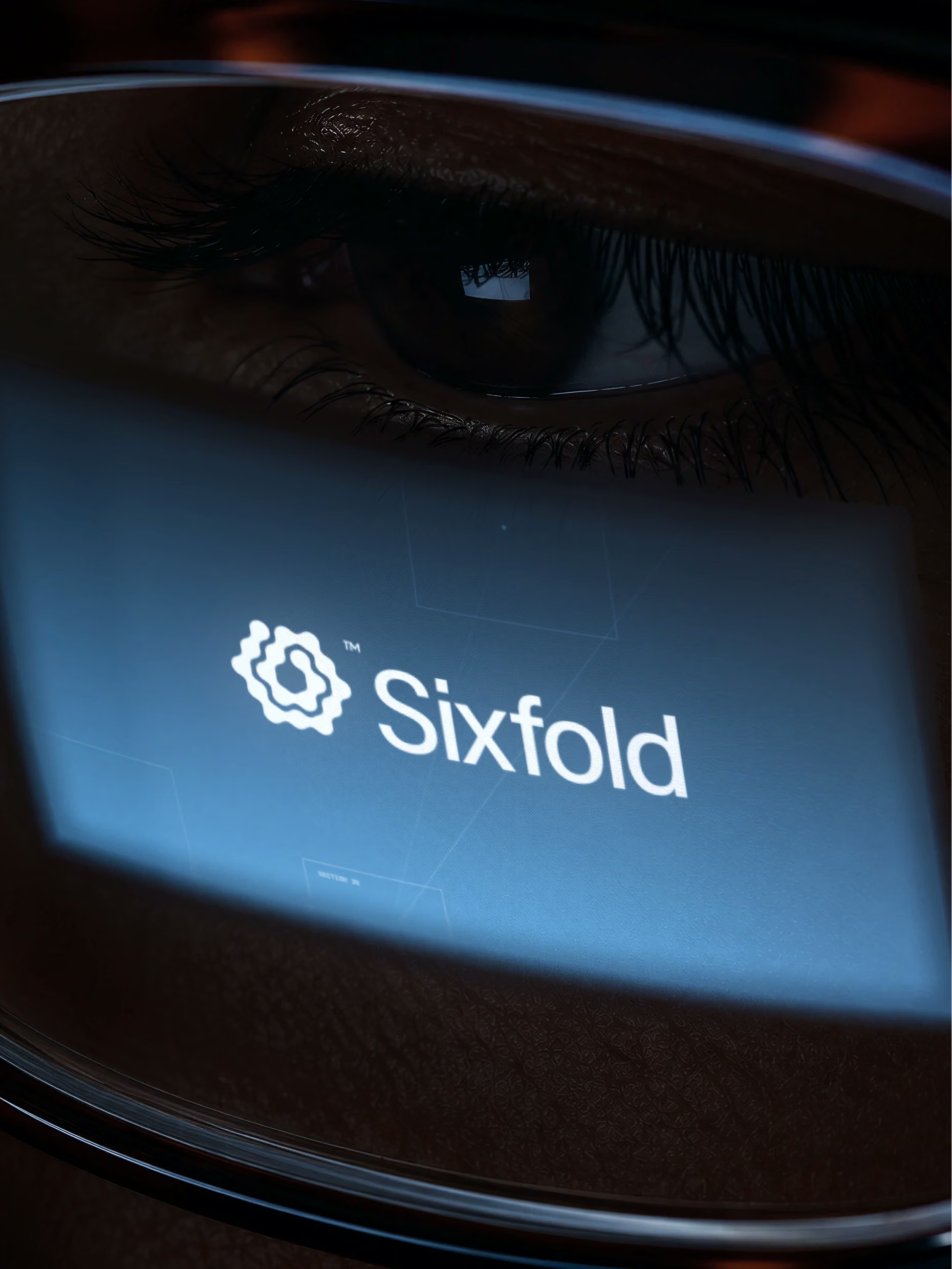
- Sixfold reads what scientific instruments see. Its graphics are built from thermal imagery.

Then set rules for the material the team makes every week:
- A diagram style for systems and processes, with simple shapes and one accent colour.
- A chart style with set colours, line weights and label sizes.
- Photography rules for labs, hardware and people at work.
- Motion that shows a process a still image cannot.
Ask the company's own engineers to check every graphic before it goes out. Our article on what makes a great deep science brand identity goes deeper into this.
A brand for hiring
Deep tech companies compete for a small pool of specialists. Physicists, roboticists and hardware engineers often have offers from large labs and big tech firms. The brand is part of how a company wins them.
- A clear careers page that explains the mission, the problems and the team.
- Real work shown. Photos of the lab, the hardware and the people doing the work.
- Technical writing such as papers, talks and blog posts, designed in the same brand.
- A consistent look across job posts, conference talks and social media.
Brand for a long road to product
Deep tech often takes many years to reach a product. The brand has to work at every stage, from a lab spinout to a company with customers. BCG reports that investment in deep tech more than quadrupled from $15 billion in 2016 to more than $60 billion in 2020, so many companies now raise several rounds before revenue.
This shapes the brand in a few ways:
- Build a system, not a campaign. The identity should last through several funding rounds without a full redesign.
- Leave room for the product. The logo and graphics should still work when real hardware or software arrives.
- Show progress over time. The website and decks should make it easy to add milestones, results and partners.
- Plan a refresh, not a restart. Update templates and the website as the company moves from research to product.
Common mistakes
- Generic tech imagery. Stock circuits and glowing particles say nothing about the company.
- Explaining the physics first. Lead with what the technology does, then how it works.
- Claims ahead of the data. Big promises in a tagline are hard to take back and lose engineers.
- Renders presented as products. Showing a finished product that does not exist yet costs trust when people find out.
- A logo without a system. A logo alone gives the team nothing to build decks, diagrams and posts with.
- One audience only. Copy written for scientists loses investors, and copy written for investors loses scientists.
For more on how we work with technology companies, see our tech branding agency page.
Questions about deep tech branding
Deep tech branding is the work of giving a hard-tech company, such as a quantum, robotics or energy company, a clear identity: its positioning, name, logo, typography, colour, graphics, motion and website. It makes complex technology clear to investors, partners and hires while staying accurate enough for engineers.
Lead with what the technology does for the customer, not how it works. Then build the graphics from the real science, show real hardware and lab work, and keep every claim tied to what has been shown.
Usually before a large funding round, when it spins out of a university or comes out of stealth, or when it starts hiring at scale. A clear brand early on saves a full redesign later.
It helps to work with a designer or a [science branding agency](/science-branding-agency) that is used to complex technology. They will read the research, ask the right questions and know how the brand has to work in decks, diagrams and papers.
Second Eight is a science branding agency for science, health and technology companies, including deep tech teams in quantum, robotics and energy.
Not sure your brand is working?
I'm Sam, founder of Second Eight. I design brands for AI, tech, science and health companies, so I know what investors and customers read in a brand before they read anything else. Send me your website and deck, and I'll tell you what works, what's holding you back and what I'd change. You get a one-page scorecard and a 30-minute call with a straight answer: keep it, fix it or rebuild it.