AI Startup Branding: How to Brand an AI Company
In short
- Most AI brands look alike: dark gradients, glowing nodes and abstract brains. That is the problem to solve.
- Build the identity from what your product actually does, not from "AI" in general.
- The product is where people meet the brand, so design the identity and the interface together.
Contents (7)
Hundreds of AI companies launch every month, and most of them look the same: a dark gradient, a glowing network, a sans serif logo and a promise to transform something. When everything looks alike, investors and customers stop seeing any of it.
This guide covers how to brand an AI startup so it stands apart, with examples from AI brands we designed at Second Eight.
Start with what the product does, not with "AI"
"AI" describes how a product works, not what it does for someone. The strongest AI brands start from the job the product does.
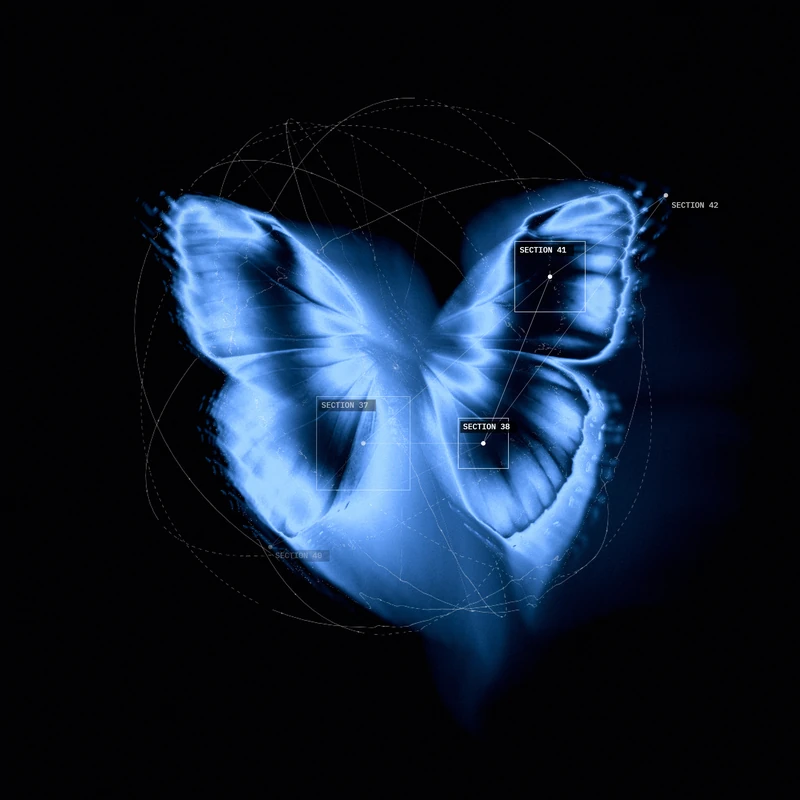
- Sixfold is an AI company for research. It reads what instruments see (microscopy, thermal, spectral and sensor streams) and returns the parts, the numbers and the links between them. The graphic system is built from thermal imagery: specimens seen as heat, sectioned and numbered.
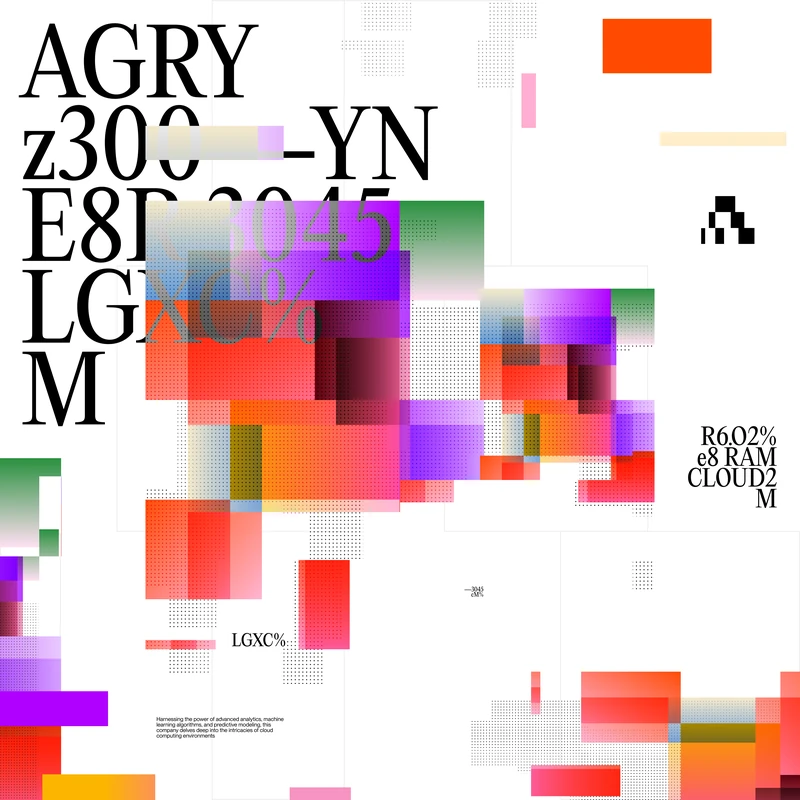
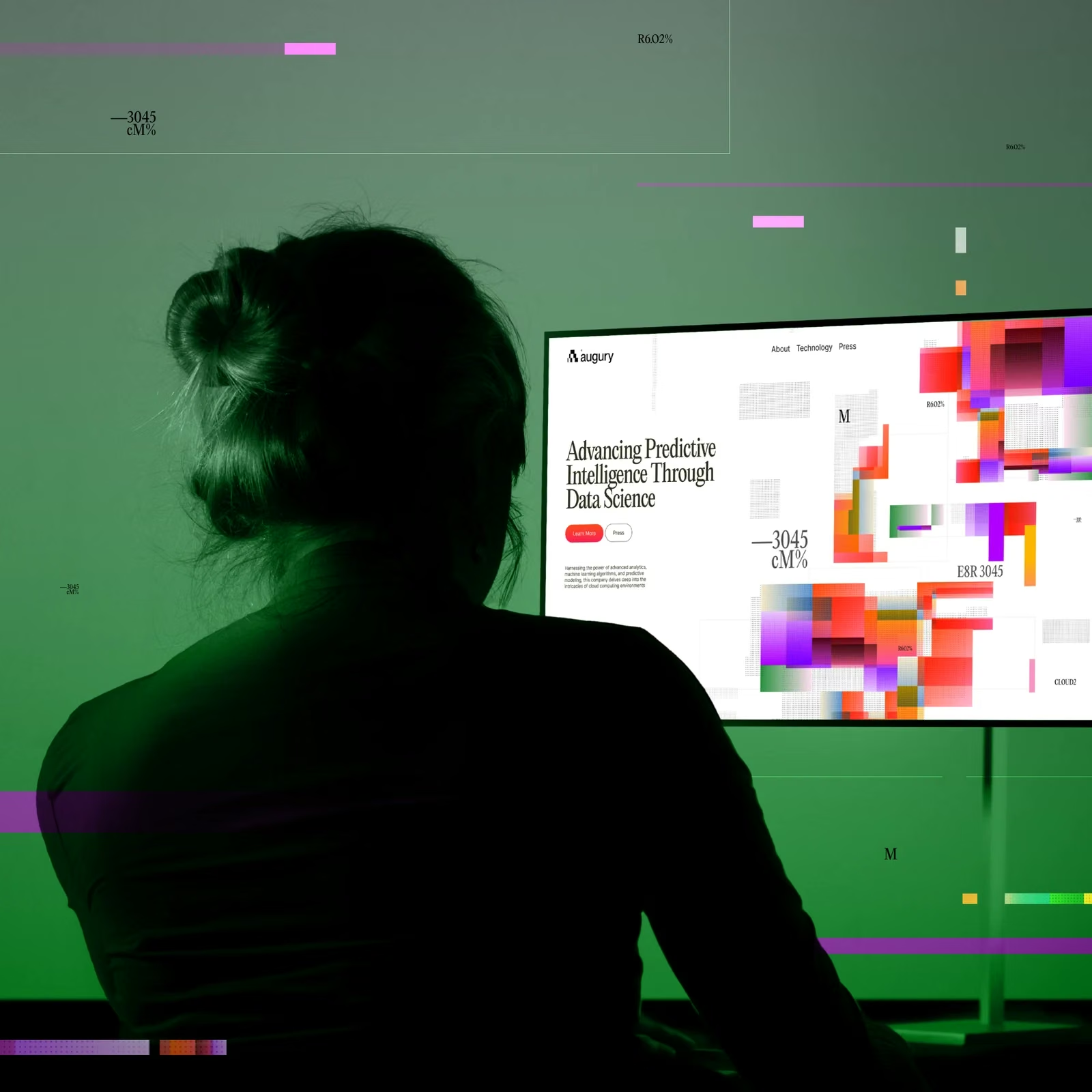
- Augury builds predictive analytics. Its graphic language is generative: moving pixels stand for prediction and cloud computing.
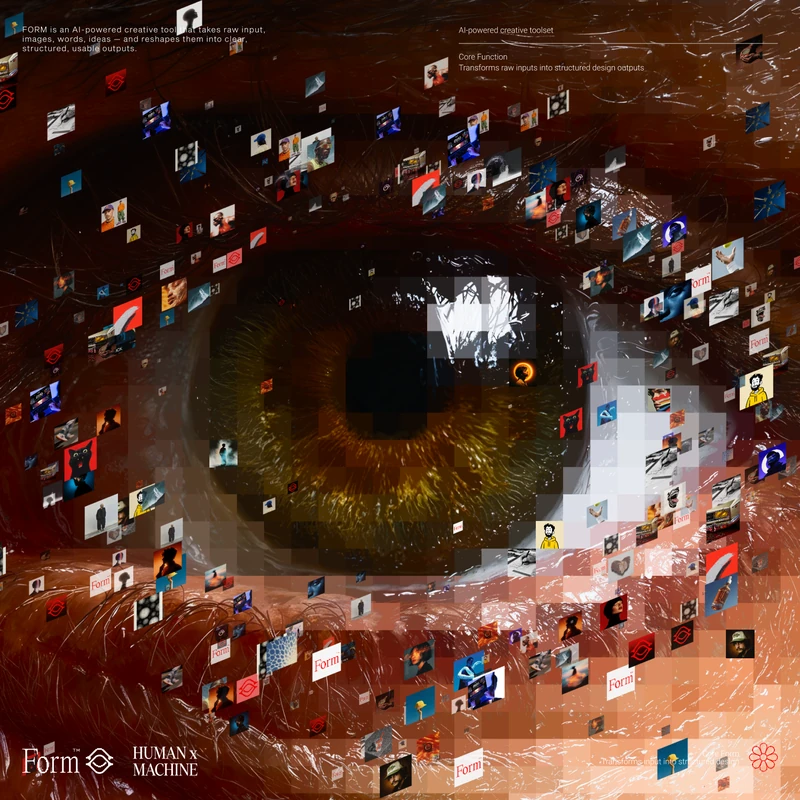
- Form turns unstructured input into structured output. Its identity has two sides, human and machine, and the logo is a dual eye that joins them.
None of them uses a neural network or a robot. Each one shows its own product idea.

Name it so people can say it
An AI company name is typed, spoken on calls and read in investor updates. It should be short, easy to say and easy to spell.
- Augury comes from the ancient practice of reading signs, for a company that predicts outcomes.
- Sixfold is the hexagon's symmetry, six neighbours around every point. The logo is that grid made visible.
- Nodelink, a network for large-scale AI collaboration, says what it connects.
Avoid names that only work with ".ai" after them. The name should stand on its own.
Find a visual language that is yours
The visual language is what makes an AI brand recognisable without the logo. It is also the hardest part, because the obvious ideas are already taken.
Ways to find it:
- Use the data the product works with. Sixfold uses thermal images. A product for documents could use the structure of text.
- Use the process. Augury's pixels move the way predictions update.
- Use a contrast. Form puts smooth, organic images beside pixelated, digital ones.

Design the brand and the product together
For most AI companies the product is the brand. People spend far more time in the interface than on the website. If the app looks like a template, the logo cannot fix it.
In Form, layouts follow abstract grids with a clean editorial structure, and the same pixel modules appear in the icons and the interface. In Sixfold, the app uses the same thermal palette and numbered labels as the brand graphics.
Motion matters more for AI
AI products change and respond. Static branding cannot show that. A logo that builds, a graphic that updates and a calm interface motion all show a product that thinks. Sixfold's motion is slow and physical: heat spreads, cools and settles. Augury's pixels move as predictions change.
What an AI startup needs at launch
- A name and a logo that work as an app icon and a favicon
- A visual language built from the product
- Typography and colour with rules for the product
- Product UI in the brand
- A website that says in one sentence what the product does
- A pitch deck
- Logo animation and a short launch film
Questions
Start from what the product does for people, not from AI in general. Build a name, a logo and a visual language from that idea, and design the product interface in the same system so the brand and the product feel like one thing.
Because they start from the same idea of AI: networks, brains, glowing particles and dark gradients. Starting from the product's own data, process or result leads to something different.
It can use the domain, but the name should work without it. A name that only makes sense with ".ai" will feel dated as AI becomes part of every product.
Working on a brand for your company?
Second Eight is a branding agency for science, health and technology companies. Sam Hox, the founder, leads every project. Two clients at a time.